You lie there in the dark, completely still, listening to your husband's breathing slow as he drifts off to sleep.
And you stare at the ceiling.
Not because anything went wrong tonight. Not because there was an argument. Not because he wasn't kind. But because... something is still missing.
And you can't say what it is. And you don't know who to ask.
In the morning, you pack your child's bag, heat the food, greet your husband at the door, and smile. You are a good wife. Everyone says so. The house is clean. The meals are cooked. The prayers are made. You are doing everything you were taught to do.
So why does the emptiness keep coming back?
Maybe I'm just being ungrateful.
Maybe this is just what marriage is.
Maybe I want too much.
You've tried Googling it at 2am — typing half a question into your phone and then deleting it before you even finish, because you were too ashamed to let even your phone know what you were searching for. You found nothing that spoke your language. Nothing that understood your faith. Nothing that didn't make you feel like a bad Muslim woman for even having the need.
So you closed the tab. And you went back to silence.
You've been carrying this silence for months. Maybe years. It has followed you into your prayers, into your daily routines, into quiet moments with your husband where you wonder if he notices too — if he can see it in your face — if he also feels the distance growing but doesn't know how to cross it.
You've never told your mother. She would either dismiss it or panic. Your friends don't talk about these things — not really, not honestly. And your religious community? The very thought of bringing this up makes your stomach turn.
So you have been utterly alone in this.
But here is what nobody has told you yet:
You are not broken. You are not ungrateful. You are not asking for too much.
What you are experiencing has a name. It has a cause. And — more importantly — it has a solution that is completely, unapologetically halal.
Drop everything you are doing now and listen to every word I am about to say.
This framework is not new in the sense of being invented from nothing. Almost everything in it comes from real Islamic scholarship that has existed for centuries — classical fiqh, the words of the Prophet ﷺ, the commentary of scholars who wrote about marriage in detail hundreds of years ago. The problem was never that this knowledge didn't exist. It's that it was scattered across texts most women never get handed, written in language most of us were never taught to read, and almost never translated into something an ordinary married woman could actually use.
Somewhere along the way, that knowing got lost. The conversations stopped. The silence set in. And a whole generation of Muslim wives were left navigating one of the most important parts of their marriage with absolutely no guidance, no tools, and no permission to even name what they were missing.
I know this because I was one of them.
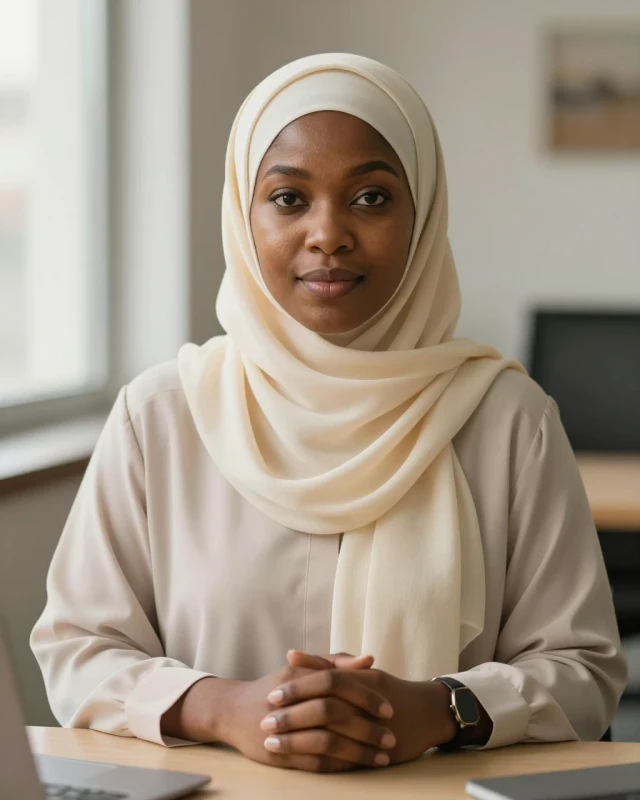
My name is Shahida Ismail.
The first thing you should know about me is that I am not a marriage counsellor. I am not a doctor. I am not a sheikh or an Islamic scholar. I am just a married Muslim woman from Kaduna — a wife, a mother — who spent years in the exact silence you are in right now, and who finally, finally found her way out of it.
My Story — And Why I Almost Never Told It
I grew up in Kaduna. The second daughter of a deeply religious household. My mother was a devoted woman — always fasting, always praying, always serving — and I admired her completely. She raised me to be a good Muslim wife. She taught me how to cook, how to keep a home, how to dress modestly, how to speak with respect. She taught me everything.
Except one thing.
Nobody — not my mother, not my aunties, not a single female elder in my life — ever spoke to me about intimacy. About what I should expect. About what I was allowed to feel. About what it meant to be physically fulfilled in a marriage.
I got married at 24. I was excited. I was in love. And I walked into my marriage completely, embarrassingly unprepared.
The first few months were fine — the way new things are always fine. But slowly, very quietly, something began to feel... incomplete. Like a meal that looks beautiful but leaves you hungry after. I would lie there afterward and wonder: Is this it? Is this all it is supposed to be?
I thought it was me. I told myself I was being immature. That I was watching too many unrealistic expectations creep in from I didn't know where. That a good Muslim woman didn't focus on these things. That my job was to give, to serve, to please — not to ask for anything in return.
That belief nearly destroyed my marriage.
By the time our daughter was born, I had mostly stopped hoping. I had filed this part of myself away — folded it up small and put it somewhere unreachable. My husband and I were still together. We were still kind to each other. But there was a distance between us that neither of us spoke about.
He would sometimes reach for my hand in the evening and I would let him hold it, but I was not really there. I was somewhere far away inside myself, behind the wall I had built, waiting for a time that never came.
I watched him grow quieter. More distant. He stopped laughing as easily. He stopped teasing me the way he used to. And one evening — I remember this so clearly — he looked at me across the dinner table and said quietly: "Shahida. Are you happy?"
I said yes.
I don't know why I lied. Or maybe I do. Because if I said no, I would have had to explain something I didn't have words for yet.
That night I cried in the bathroom with the tap running so nobody could hear me. I was not even sure what I was crying for. I just knew that something was wrong and I had absolutely no idea how to fix it.
I tried everything.
I Googled "how to improve intimacy in Muslim marriage" at midnight and got a list of Western relationship articles that talked about things that had nothing to do with my life, my faith, or my culture. I tried one. ItIt made things more awkward, not less.
I found an anonymous forum where women discussed relationship problems. The advice was casual, inappropriate, and — honestly — some of it frightened me. These were not my people. They did not understand the framework I was operating within.
I watched YouTube marriage videos by well-meaning people who spoke in very general terms about "communication" and "love languages." Nothing was specific. Nothing reached the actual problem.
I bought a relationship book written by a Western therapist. I read half of it. It was beautifully written for someone else's life. Not mine.
I tried simply staying silent and hoping things would improve on their own. They did not.
And then I tried convincing myself that I was asking for too much — that what I was feeling was arrogance dressed as longing — and that I should suppress it and be grateful. That lasted about three weeks before the emptiness came back louder than ever.
Nothing worked. Nothing even came close.
And then, slowly, something shifted — not because of a single dramatic moment, but because I made a decision: if nobody was going to hand me permission, I was going to go and find out for myself what my own deen actually said, instead of guessing at it through shame and culture.
So I started reading. Not opinion pieces. Not forum threads. The actual sources — tafsir, hadith commentary, what the classical scholars had written about marriage centuries ago.
What I found stopped me cold.
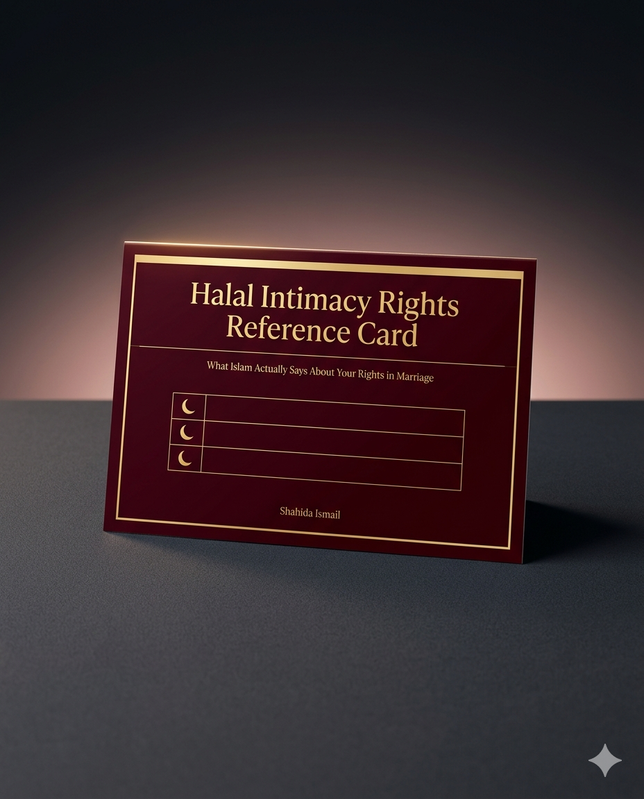
Allah describes the entire purpose of marriage as tranquility, affection, and mercy between spouses (Qur'an 30:21) — not endurance, not service alone. A few verses later, spouses are described as a garment for one another (Qur'an 2:187) — a garment that covers and warms both sides, not one person clothed while the other stands exposed. And in a hadith recorded by Imam al-Bukhari, when a companion was told his wife had a right over him that he was neglecting, the Prophet ﷺ confirmed it directly. Commenting on that hadith, the scholar Ibn Hajar al-'Asqalani draws the plain legal conclusion: a wife has a conjugal right over her husband. Not a preference. A right.
Your husband has an obligation to you, I realised — not because anyone told me so in person, but because it was written, by scholars, centuries before either of us was born. Not just to provide and protect. But to attend to you. And the shame you've carried around this was never handed to you by your deen. It was handed to you by culture.
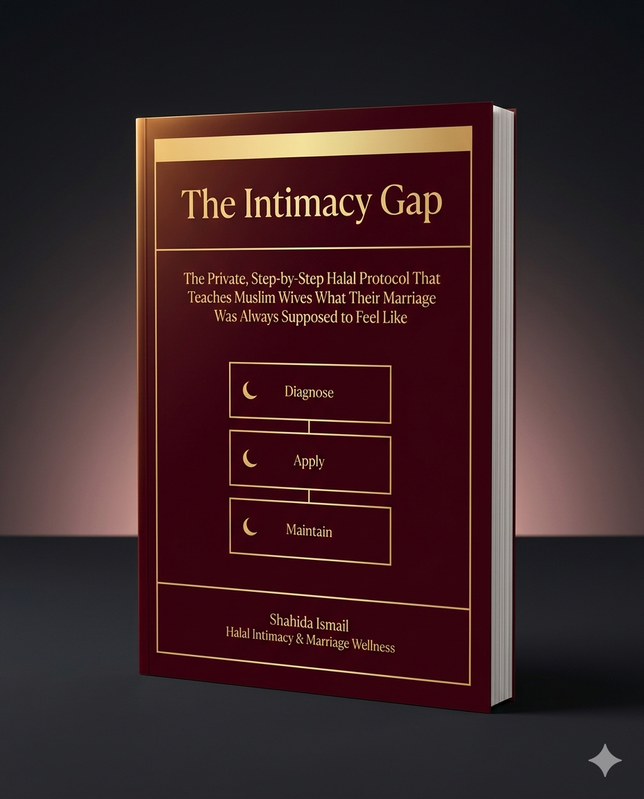
Once I had the real sources, I needed a way to actually use them — so I built myself a simple framework, working through it the way I imagine I'd want it laid out if someone had just handed it to me back when I needed it most.
Step one: Identify the specific barrier. Not all unfulfillment is the same. Some women have a body barrier — disconnection from their own physical experience. Some have a psychological barrier — shame,guilt, silence. Some have a relational barrier — a communication gap with their husband. You cannot solve a problem until you know which one you actually have.
Step two: Understand your Islamic rights and your emotional needs simultaneously. Knowledge is power only when it lands emotionally, not just intellectually. This step is about internalising — truly internalising — that what you want is not haram. It is your right.
Step three: Apply specific, practical communication and connection techniques. Specific methods for moving closer to your husband — rebuilding intimacy with dignity, without conflict, without ego damage on either side.
I went home that evening cautiously hopeful. Not convinced. Just... willing to try.
The first two days, I noticed nothing dramatic. I followed her guidance. I did the self-assessment she had sketched out for me. I read the three ayat and the two hadith she had referenced. I sat with them. I let them settle.
The first two days, I noticed nothing dramatic. I followed her guidance. I did the self-assessment she had sketched out for me. I read the three ayat and the two hadith she had referenced. I sat with them. I let them settle.
On the third day, something shifted.
I cannot fully explain it — except to say that it was like a knot in my chest slowly loosening. A permission I had been waiting my entire married life for someone to give me. And then I realised: nobody was going to give me that permission. I had to take it. Because it was always mine.
That was the breakthrough.
Within the first week, I had a conversation with my husband that we had never been able to have before. I used a gentle script I had worked out for myself, drawing on everything I'd just learned. I was nervous. My hands were shaking. But I said what I needed to say — softly, within Islamic adab, with love and without blame.
We were both quiet for a while after that.
Within three weeks, the difference in our marriage was not subtle. It was visible. My confidence returned. A warmth came back into my husband's face when he looked at me. The distance began to close. And one evening, he looked at me across the room and said:
"I don't know what's changed, but you seem happier, lighter, and closer to me than you've been in years."
I smiled and said nothing. But inside, I was thinking: everything changed. Absolutely everything.
I started writing all of this down — not to publish it, at first, just so I wouldn't lose it. So that if I ever needed to remember why I was allowed to feel the way I did, it would be there in black and white, sourced, not just felt.
After sharing what I'd found and built with a few women close to me — through messages, voice notes, late-night calls — I realised I couldn't keep doing it one conversation at a time. Too many women needed this. Too many marriages were quietly suffering in a silence that nobody had given them permission to break.
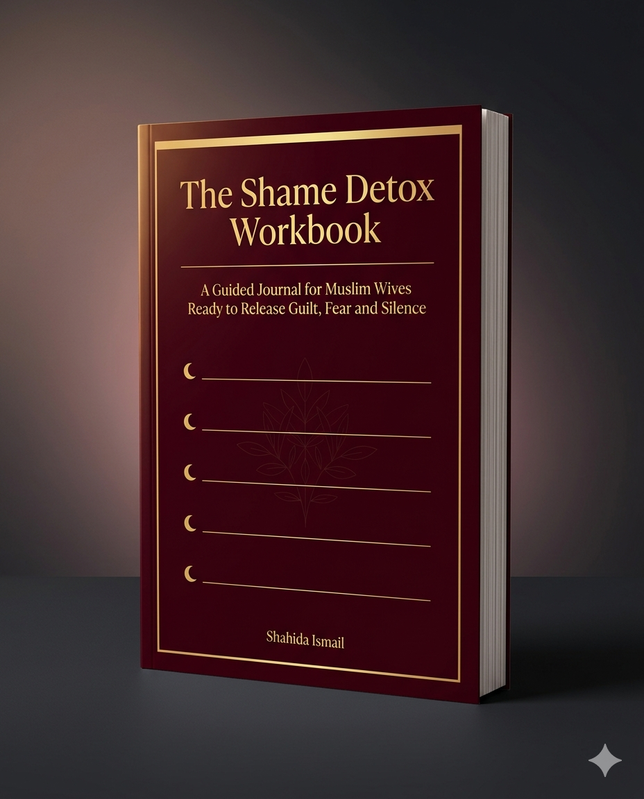
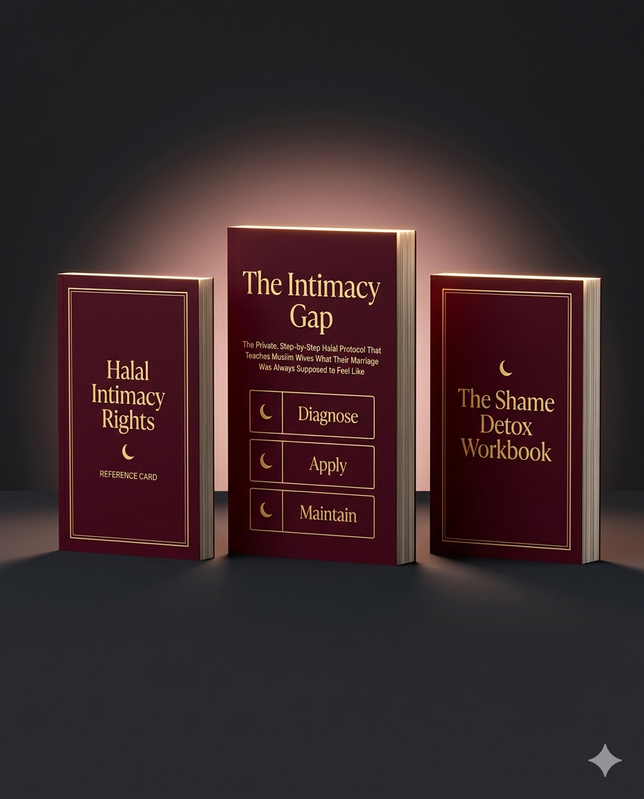
So I put everything inside one simple, private, beautifully organised guide. The full framework. The self-assessment. The Islamic rights reference. The communication scripts. The weekly rhythm planner. Everything — laid out step by step so that you can use it from wherever you are, completely privately, at your own pace.
No embarrassing conversations. No public forums. No pharmacy visits. No awkward Google searches. Just you, your guide, and the clarity you have been waiting for.